
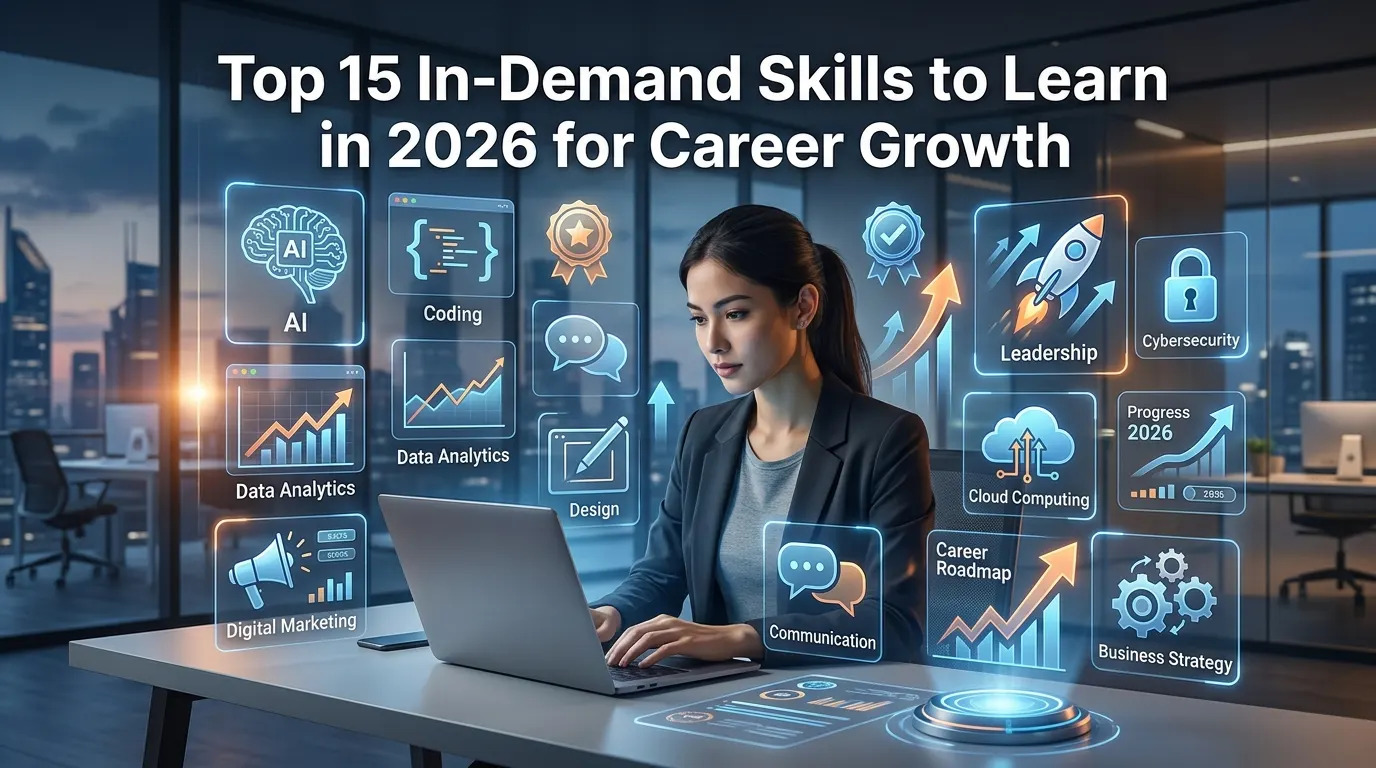
The job market in 2026 is shifting faster than at any point in modern history. Roles that didn’t exist five years ago — prompt engineers, AI ethicists, sustainability analysts — are now among the highest-paid in the industry. Meanwhile, traditional roles are being reshaped by automation, remote work and globalisation.
If you want to stay competitive, the question isn’t whether to upskill — it’s which skills to invest in. Below are 15 of the most in-demand skills in 2026, why they matter, and how you can start learning them today.
1. Artificial Intelligence and Machine Learning
AI is the defining technology of our era, and professionals who can build, fine-tune or apply AI models are in extreme demand. Even non-technical roles benefit from understanding AI fundamentals.
Where to start: Andrew Ng’s “AI for Everyone” course on Coursera, followed by hands-on projects with Python and TensorFlow.
2. Data Analysis and Data Visualisation
Companies are drowning in data and starving for insights. Data analysts who can clean, interpret and visualise data are valuable in nearly every industry.
Where to start: Master Excel first, then SQL, then a visualisation tool like Power BI or Tableau. Add Python or R later for advanced work.
3. Prompt Engineering and AI Tool Mastery
Knowing how to communicate effectively with AI tools like ChatGPT, Claude, Gemini and Copilot is becoming a baseline skill. Great prompt engineers can produce 10x the work of someone who only uses AI casually.
Where to start: Spend two hours a week experimenting with AI tools for your real work. Read prompt engineering guides and practise relentlessly.
4. Digital Marketing
From SEO and content marketing to paid ads and analytics, digital marketing skills remain among the most flexible and in-demand abilities in the modern workplace. They are also brilliant for freelancers and entrepreneurs.
Where to start: Google Digital Garage, HubSpot Academy and Meta’s Blueprint courses are all free and excellent.
5. UX/UI Design
As more services move online, the demand for designers who can create intuitive, attractive and accessible digital experiences keeps climbing.
Where to start: Google UX Design Certificate (Coursera), Figma tutorials, and a portfolio of three to five real projects.
6. Cybersecurity
With cyber attacks rising every year, organisations everywhere need professionals who can protect their systems and data. Cybersecurity offers some of the best long-term job security in tech.
Where to start: Google Cybersecurity Certificate, CompTIA Security+ certification and platforms like TryHackMe for hands-on practice.
7. Cloud Computing
Almost every business now runs on AWS, Microsoft Azure or Google Cloud. Cloud skills are well-paid and don’t require a computer science degree to learn.
Where to start: AWS Certified Cloud Practitioner is the most beginner-friendly entry point. Free training is available directly from AWS, Microsoft and Google.
8. Coding (Especially Python and JavaScript)
Coding remains the closest thing to a universal superpower in the modern economy. Python is excellent for data, AI and automation. JavaScript is essential for web development.
Where to start: freeCodeCamp, Codecademy or “Automate the Boring Stuff with Python” — all free and beginner-friendly.
9. Project Management
Every team and every business needs people who can plan, organise and deliver projects on time. Modern project managers blend traditional planning with agile methods.
Where to start: Google Project Management Certificate or PRINCE2 Foundation for the UK market.
10. Communication and Writing
In a world flooded with content, the ability to communicate clearly — in writing, presentations and conversation — sets you apart. Strong communicators are promoted faster, no matter the industry.
Where to start: Read “On Writing Well” by William Zinsser, take an online business writing course, and practise by writing publicly on LinkedIn.
11. Critical Thinking and Problem Solving
As AI handles more routine tasks, employers increasingly value humans who can think clearly, evaluate evidence and make good decisions under uncertainty.
Where to start: Read “Thinking, Fast and Slow” by Daniel Kahneman. Practise by solving real problems and questioning your own assumptions.
12. Emotional Intelligence (EQ)
Technical skills get you hired; emotional intelligence gets you promoted. Self-awareness, empathy, and the ability to manage relationships are at the heart of leadership and effective teamwork.
Where to start: Daniel Goleman’s books on EQ, plus deliberate practice — pause before reacting, listen more than you speak, ask better questions.
13. Adaptability and Continuous Learning
The shelf life of skills is shrinking. The most valuable trait today is the meta-skill of being able to learn new skills quickly. Companies increasingly hire for “learning ability” over specific knowledge.
Where to start: Build a weekly learning habit — even one hour a week — and apply what you learn immediately.
14. Sales and Persuasion
Every job, in some form, involves selling — selling ideas, products, services or yourself. People who can build trust and close deals will always be in demand.
Where to start: Read “To Sell Is Human” by Daniel Pink, then take a structured sales course on HubSpot Academy or LinkedIn Learning.
15. Sustainability and Green Skills
Climate-conscious roles are growing rapidly. Whether it’s sustainable supply chain management, renewable energy, ESG reporting or green building, “green skills” are increasingly valuable across industries.
Where to start: UN’s free SDG Academy, Coursera’s sustainability specialisations, or sector-specific training based on your industry.
How to Pick the Right Skills for You
Don’t try to learn all 15. Instead, pick 2 or 3 that match your career goals and commit to them deeply. Here’s a simple framework:
- One technical skill that opens doors (e.g. data analysis, coding, AI tools)
- One soft skill that boosts your impact (e.g. communication, emotional intelligence)
- One niche skill that aligns with your industry (e.g. SEO for marketers, cybersecurity for IT professionals)
This T-shaped skill development — broad knowledge plus deep expertise in a few areas — is what employers value most.
How to Actually Learn These Skills
Reading lists and bookmarking courses is not learning. Real progress comes from:
- Daily practice — 30 to 60 minutes is enough if it’s consistent
- Real projects — apply what you learn to actual problems, not just exercises
- Showing your work — write, post, build a portfolio
- Getting feedback — from mentors, peers or online communities
The biggest mistake learners make is collecting courses without ever finishing one. Pick fewer, finish them, and apply them.
Final Thoughts
The skills that matter in 2026 aren’t just about earning more money — though they will help with that. They’re about staying relevant, adaptable and confident in a world that is changing faster than ever.
The best time to start learning was a year ago. The second best time is now. Pick one skill from this list, start today, and commit to consistent improvement. The compound effect of small daily learning will surprise you within a year.
Your future earnings, your career security and your sense of purpose all begin with the next hour of focused learning.