
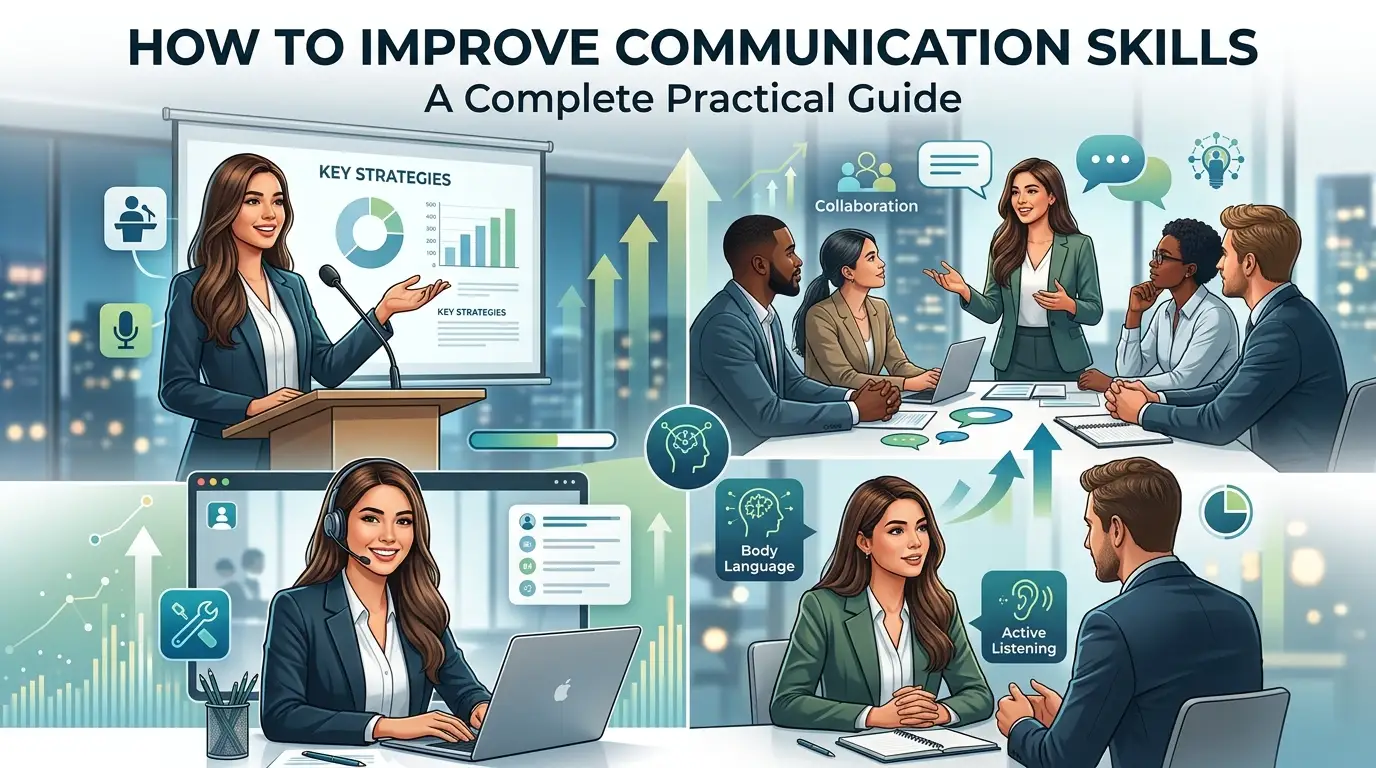
Strong communication skills can change your entire career trajectory. The most knowledgeable engineer struggles to influence anyone if they can’t explain their ideas. The most experienced manager loses good people if they can’t have honest, clear conversations. The most talented entrepreneur fails to attract investors if they can’t tell a compelling story.
The good news is that communication is not an inborn talent. It is a learned skill — and like any skill, it improves with deliberate practice. This guide will walk you through what really works, with practical techniques you can start applying today.
Why Communication Skills Matter So Much
In a 2024 LinkedIn report, communication ranked as the most in-demand soft skill by employers globally. The reason is simple: in a world powered by remote teams, instant messaging and global collaboration, the ability to communicate clearly is more valuable than ever.
Strong communicators are:
- Promoted faster than equally skilled peers
- Trusted with bigger responsibilities
- Better at negotiation, sales and leadership
- More effective at building meaningful relationships
You may be brilliant — but if you can’t communicate that brilliance, the world will never know.
The Four Pillars of Communication
Effective communication isn’t just about speaking well. It rests on four pillars:
- Verbal communication — what you say and how you say it
- Non-verbal communication — body language, tone and facial expressions
- Listening — actively understanding what others say
- Written communication — emails, messages, reports and posts
Most people focus only on verbal skills. The truly effective communicators master all four.
1. Master Verbal Communication
Speak Clearly and Concisely
Long, rambling sentences confuse listeners. Use simple words, short sentences and direct language. If you can say it in 10 words, don’t say it in 30.
A useful rule: before speaking, mentally finish this sentence — “The point I want to make is…” If you can’t finish it, you don’t know what you want to say yet.
Slow Down
Most nervous speakers talk too fast. Slowing down by even 20 percent makes you sound more confident, gives your listener time to absorb your point, and gives you time to think.
Pauses are powerful. A short silence after a key point is far more memorable than rushing onto the next sentence.
Adjust Your Tone for the Audience
How you speak to a five-year-old differs from how you speak to a CEO. Great communicators read the room — adjusting vocabulary, energy and formality based on who is listening.
Use Stories, Not Just Facts
Humans remember stories far better than statistics. When you want to make a point, wrap it in a real-world example, a customer’s journey or a personal anecdote. Even a one-sentence story dramatically increases recall.
2. Use Body Language to Reinforce Your Message
Studies suggest that as much as 55 percent of communication is non-verbal. The way you stand, the gestures you use and your facial expressions speak as loudly as your words — sometimes louder.
A few practical tips:
- Stand or sit upright — slouching projects low confidence
- Make natural eye contact — too little feels evasive, too much feels intense
- Open posture — avoid crossed arms, which can read as defensive
- Smile genuinely — it builds trust faster than almost any other signal
- Mirror gently — subtly matching the energy and posture of others increases rapport
Record yourself on video occasionally. You’ll be surprised what you notice — and what you can improve.
3. Become a World-Class Listener
Most people don’t listen — they wait for their turn to speak. Yet listening is the most underrated communication skill. People feel respected, understood and valued when they feel truly heard.
Active listening involves:
- Putting your phone away — physical presence matters
- Maintaining eye contact without staring
- Letting the speaker finish without interrupting
- Paraphrasing back what you heard (“So if I’m understanding correctly, you’re saying…”)
- Asking thoughtful follow-up questions
The next time you have a conversation, focus 90 percent of your energy on understanding rather than replying. The quality of your relationships will transform.
4. Strengthen Your Written Communication
In the modern workplace, much of your communication happens in writing — emails, Slack messages, reports, LinkedIn posts. Strong written communication isn’t about fancy vocabulary; it’s about clarity.
A few rules to live by:
- Lead with the main point — don’t bury it under polite waffle
- Use short paragraphs — long blocks of text get skipped
- Re-read before sending — typos and unclear sentences damage credibility
- Match the medium — a Slack message is informal, an email to a client should be polished
- Use bullet points when listing items, not for everything
If you write well, you’ll be perceived as more intelligent — even when discussing the same content as someone with poorer writing.
5. Develop Emotional Intelligence
Communication is not just about words — it’s about understanding emotions, both yours and the other person’s. Emotional intelligence helps you:
- Pick up on subtle cues like tone, hesitation or stress
- Choose the right moment to give feedback
- Stay calm during heated conversations
- Disagree without damaging relationships
Practising self-awareness is the first step. Notice your own emotional state before important conversations. If you’re frustrated or anxious, address that internally before speaking.
6. Practise Public Speaking — Even If You’re an Introvert
You don’t need to dream of being on a TED stage. Public speaking simply means speaking to a group — a team meeting, a client pitch, a wedding toast. Confidence in these moments multiplies your influence.
Tips for getting better at public speaking:
- Prepare more than you think you need — but don’t memorise word-for-word
- Open with a story or question to hook attention
- Use the “tell, then tell, then tell” structure — preview, deliver, summarise
- Embrace nerves — every great speaker still feels them
- Join a group like Toastmasters — nothing beats real practice with feedback
7. Learn to Have Difficult Conversations
Career growth requires speaking up when it’s hard — pushing back on a poor idea, giving constructive feedback, asking for a raise, addressing conflict. Avoidance might feel easier, but it stunts your growth.
The framework that works:
- State the facts — what happened, without judgement
- Share the impact — how it affected you or the team
- Ask their perspective — listen genuinely
- Suggest the way forward — collaborate on a solution
Practising this turns difficult conversations from dreaded events into opportunities to build trust.
8. Learn From Great Communicators
Great communicators are everywhere — and you can learn from them for free. Watch TED Talks, podcast hosts, your favourite leaders and even your most articulate friends. Notice what makes them effective. Then steal their techniques shamelessly and adapt them to your style.
Final Thoughts
Communication is the closest thing to a true career superpower. It influences how others see you, how much you earn, the relationships you build, and the impact you have on the world.
The good news? It’s a skill, not a talent. Focus on the basics, practise daily, and you will see real change within months. Speak clearly, listen deeply, write thoughtfully, and stay emotionally aware. Master these and almost every door in your career will open more easily.
Your next conversation is your next opportunity. Make it count.